84 garments across eras and cultures
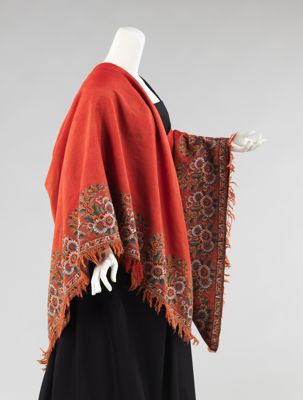
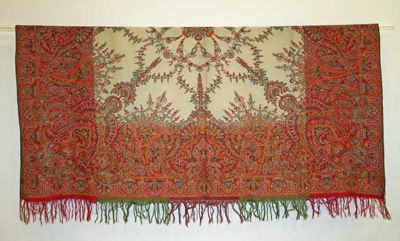
These two shawls reveal how the Kashmir paisley craze swept through European fashion like wildfire, transforming from exotic luxury to wardrobe staple. The earlier French example shows the motif in its full imperial glory—those dense, swirling paisleys crowding the red wool like a botanical fever dream—while the later Scottish piece has domesticated the same teardrop forms into neat, symmetrical borders framing serene cream wool.
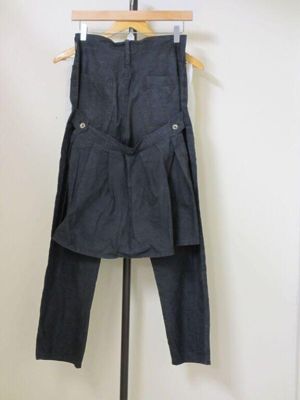
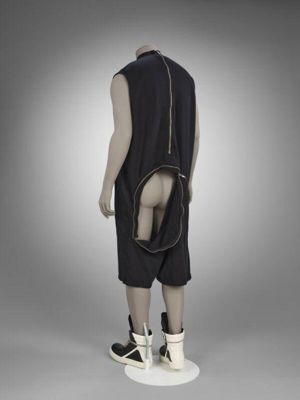
These two pieces trace the evolution of deconstructivist fashion's obsession with turning the body into a site of architectural experiment. The earlier trousers with their detachable apron-like flap and utilitarian snaps suggest a kind of industrial pragmatism—clothing as modular system—while the later draped bodysuit with its strategic cutouts and zip closures pushes that same logic toward something more theatrical and body-conscious.
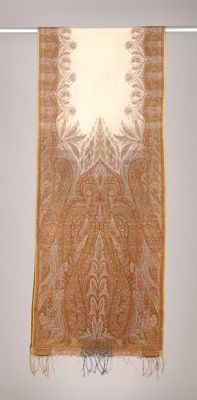
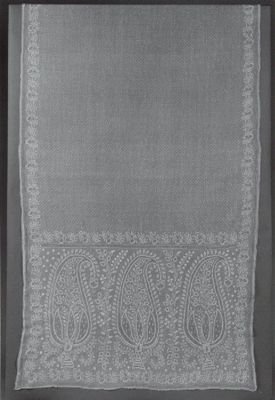
The paisley's journey from Kashmir to European looms plays out in these two shawls like a game of telephone across decades. The earlier white cotton piece whispers its Indian ancestry through delicate, almost tentative paisleys clustered at the border—European mills still learning to speak this foreign visual language.
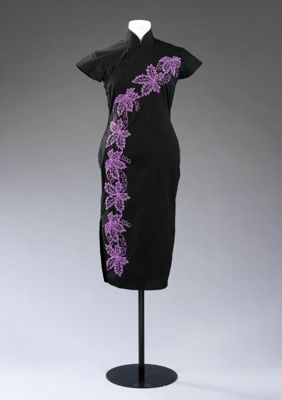
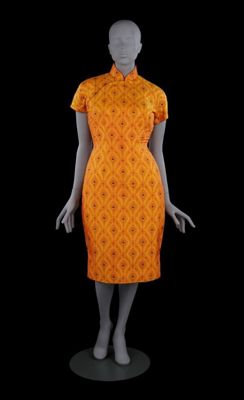
These two 1950s Hong Kong qipaos capture the precise moment when traditional Chinese dress absorbed Christian Dior's New Look, trading the loose fit of classical cheongsams for body-conscious Western tailoring.
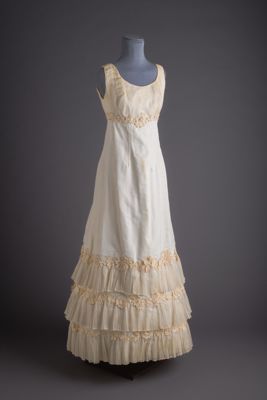
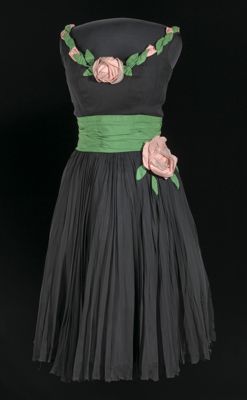
These two dresses reveal Ann Lowe's extraordinary range across four decades of couture, from the cream silk taffeta's cascading tiers of ruffles that anticipate Jacqueline Kennedy's wedding gown to the charcoal chiffon's knife-sharp pleats punctuated by her signature silk roses.
Both dresses ride the same wave of post-war optimism, when Dior's New Look made women hungry for yards of fabric after years of rationing — but they speak different languages of luxury. The American cotton version translates haute couture into something a secretary could afford, with its cheerful floral print and practical midi length, while the French silk number stays true to Dior's original vision with its sumptuous satin and dramatic full skirt that demands a ballroom, not a backyard.