204 garments across eras and cultures
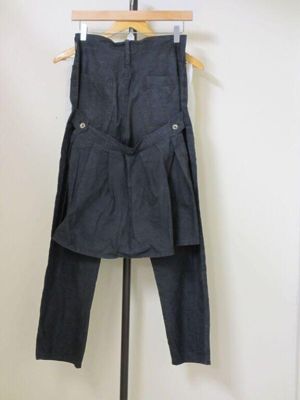
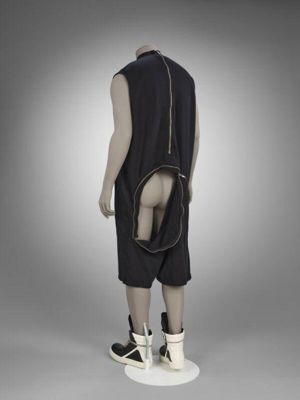
These two pieces trace the evolution of deconstructivist fashion's obsession with turning the body into a site of architectural experiment. The earlier trousers with their detachable apron-like flap and utilitarian snaps suggest a kind of industrial pragmatism—clothing as modular system—while the later draped bodysuit with its strategic cutouts and zip closures pushes that same logic toward something more theatrical and body-conscious.
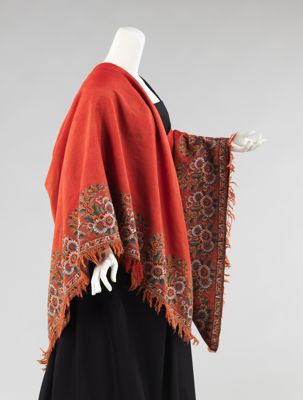
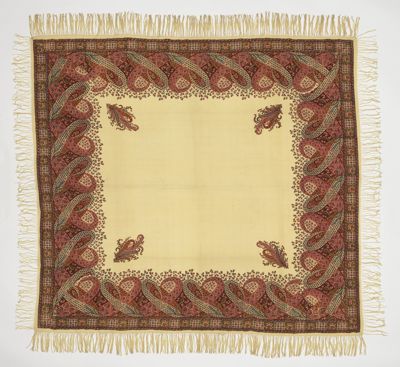
These shawls trace the journey of the Kashmir paisley from Napoleonic luxury to Victorian domesticity, both carrying the teardrop motifs that made European women swoon for "Oriental" exoticism. The earlier red shawl wraps its wearer in bold, saturated color with paisley borders that feel almost militant in their precision, while the later cream version softens the same motifs into something more parlor-appropriate—same DNA, different social temperature.
Both dresses ride the same wave of post-war optimism, when Dior's New Look made women hungry for yards of fabric after years of rationing — but they speak different languages of luxury. The American cotton version translates haute couture into something a secretary could afford, with its cheerful floral print and practical midi length, while the French silk number stays true to Dior's original vision with its sumptuous satin and dramatic full skirt that demands a ballroom, not a backyard.
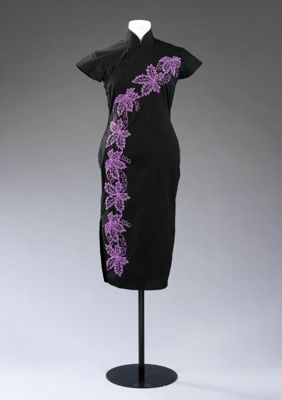
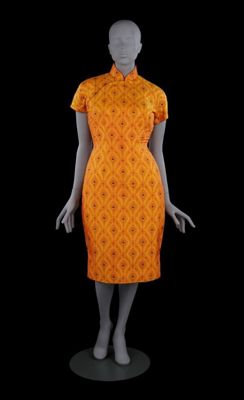
These two 1950s Hong Kong qipaos capture the precise moment when traditional Chinese dress absorbed Christian Dior's New Look, trading the loose fit of classical cheongsams for body-conscious Western tailoring.
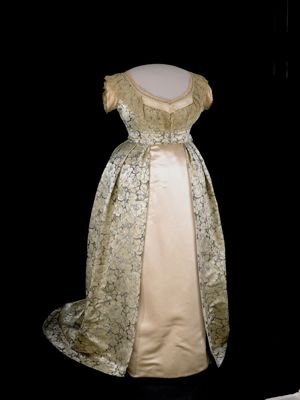
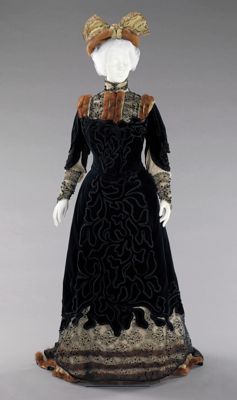
These two gowns reveal how the Second Empire's taste for theatrical luxury filtered through different social strata across two decades. The earlier brocade ball gown, with its off-shoulder bertha collar and metallic weave catching light like armor, speaks the formal language of Empress Eugénie's court—all glittering surfaces and architectural volume over crinolines.