169 garments across eras and cultures
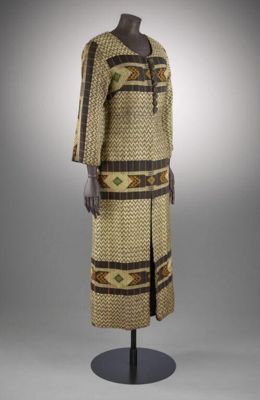
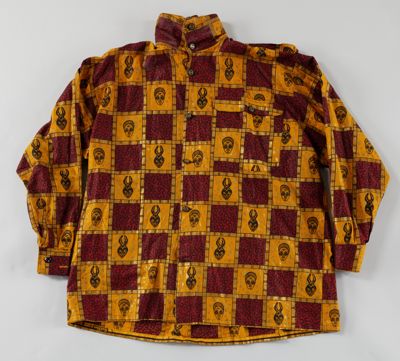
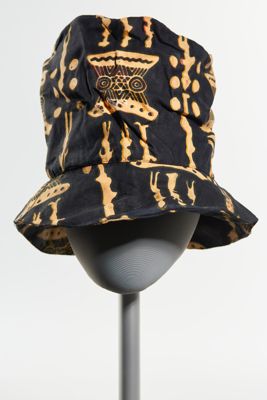
Both pieces pulse with the same cultural awakening—that moment in the '70s when African American fashion turned toward ancestral aesthetics as political statement. The dashiki's geometric checkerboard of burgundy and gold, punctuated by symbolic motifs, shares DNA with the bucket hat's bold figural patterns rendered in the same high-contrast palette that makes wax-print fabric so visually arresting.
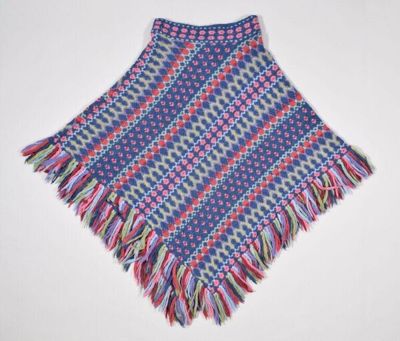
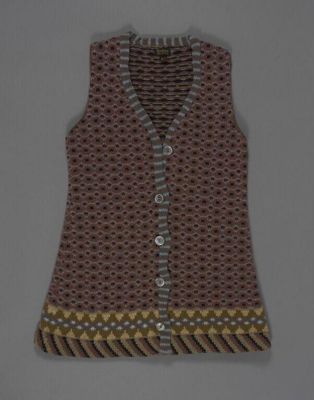
These two pieces capture Kaffe Fassett at different points in his obsession with Fair Isle geometry—the poncho reveling in the full riot of traditional Shetland patterning with its cascading zigzags and rainbow fringe, while the waistcoat distills that same DNA into something more restrained, almost architectural.
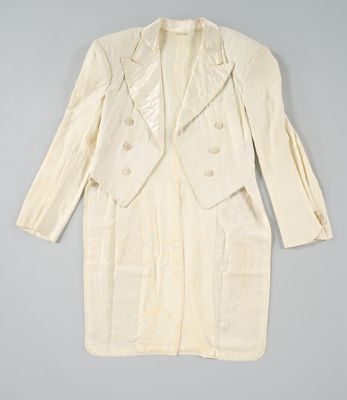
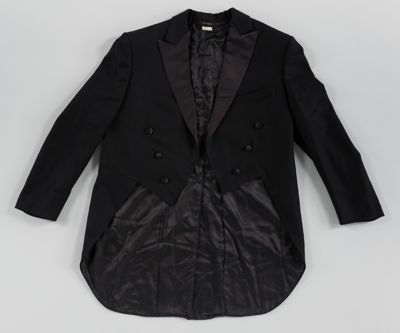
These two tailcoats reveal how formal menswear's most rigid silhouette barely budged across three decades of dramatic social change. The cream silk satin coat from the 1950s carries the same exacting proportions as its Victorian predecessor — that knife-sharp waist suppression, the identical swallow-tail drape, the precise double-breasted button stance — but swaps somber black wool for louche ivory silk that catches light like champagne.
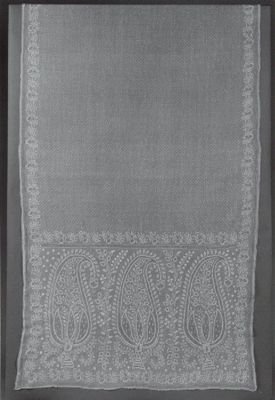
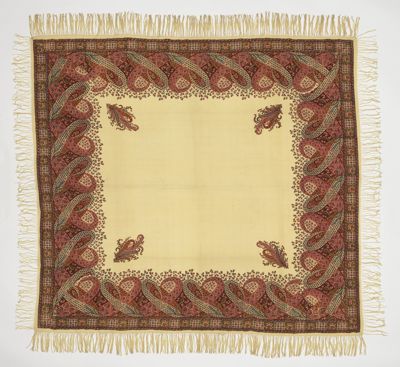
The teardrop paisley that winds along both shawls' borders carries the same genetic code, even as it traveled from the delicate white cotton of Regency drawing rooms to the richer wool and burgundy palette of mid-Victorian taste.
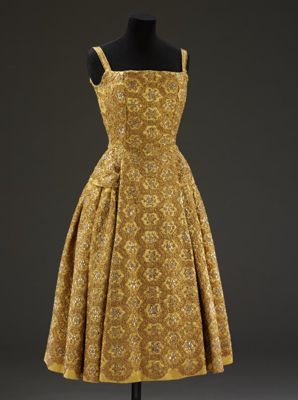
Both dresses ride the same wave of post-war optimism, when Dior's New Look made women hungry for yards of fabric after years of rationing — but they speak different languages of luxury. The American cotton version translates haute couture into something a secretary could afford, with its cheerful floral print and practical midi length, while the French silk number stays true to Dior's original vision with its sumptuous satin and dramatic full skirt that demands a ballroom, not a backyard.
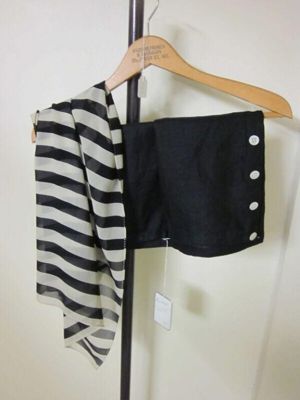
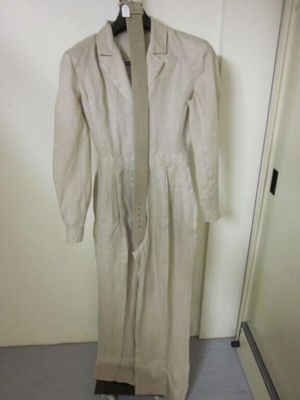
These two pieces trace Calvin Klein's evolution from his early minimalist separates to the refined ease that would define 90s American sportswear. The black linen ensemble with its crisp button details and structured skirt shows Klein still thinking in traditional garment categories, while that cream jumpsuit—with its relaxed tailoring and effortless drape—reveals how he learned to collapse the boundaries between formal and casual into one fluid silhouette.