37 garments across eras and cultures
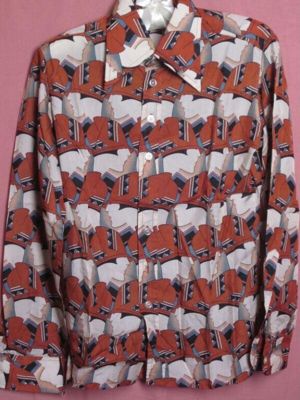
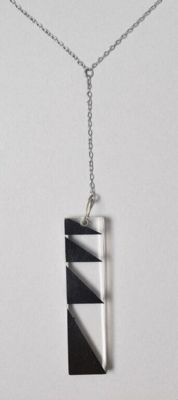
That russet shirt's tessellated cubes and the pendant's stark chevron ladder both spring from the same mid-century obsession with geometric precision, but they reveal how Op Art's visual tricks traveled different paths. The shirt domesticates Bauhaus geometry into something wearable for daily life—those interlocking forms creating a subtle optical shimmer across the torso—while the pendant distills the movement's high-contrast drama into pure statement jewelry.
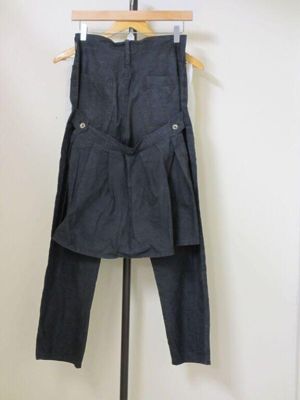
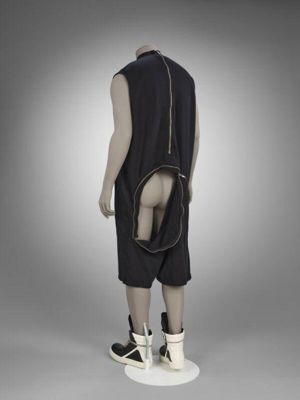
These two pieces trace the evolution of deconstructivist fashion's obsession with turning the body into a site of architectural experiment. The earlier trousers with their detachable apron-like flap and utilitarian snaps suggest a kind of industrial pragmatism—clothing as modular system—while the later draped bodysuit with its strategic cutouts and zip closures pushes that same logic toward something more theatrical and body-conscious.
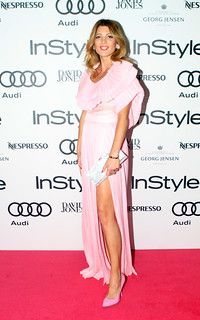
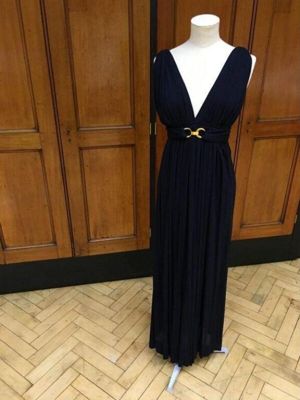
These dresses are separated by fifty years but united by their devotion to the body's natural architecture—both use fluid draping to create that liquid-mercury effect perfected in 1930s bias cuts. The pink gown's asymmetrical shoulder treatment and the navy's plunging neckline are different routes to the same destination: maximum skin, minimum interruption, letting fabric pool and flow like water over curves.
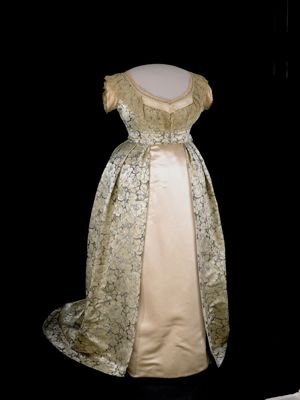
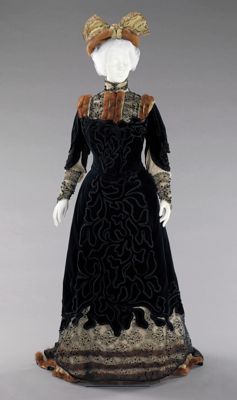
These two gowns reveal how the Second Empire's taste for theatrical luxury filtered through different social strata across two decades. The earlier brocade ball gown, with its off-shoulder bertha collar and metallic weave catching light like armor, speaks the formal language of Empress Eugénie's court—all glittering surfaces and architectural volume over crinolines.
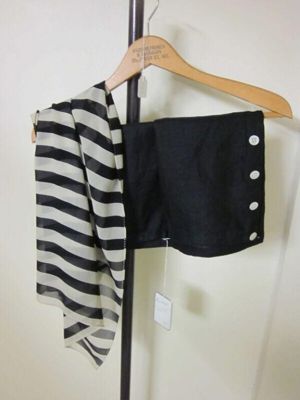
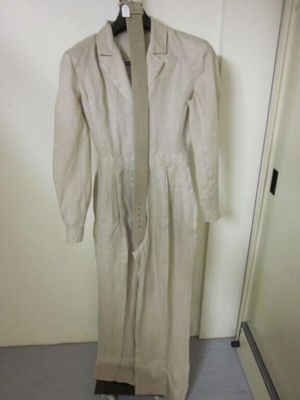
These two pieces trace Calvin Klein's evolution from his early minimalist separates to the refined ease that would define 90s American sportswear. The black linen ensemble with its crisp button details and structured skirt shows Klein still thinking in traditional garment categories, while that cream jumpsuit—with its relaxed tailoring and effortless drape—reveals how he learned to collapse the boundaries between formal and casual into one fluid silhouette.
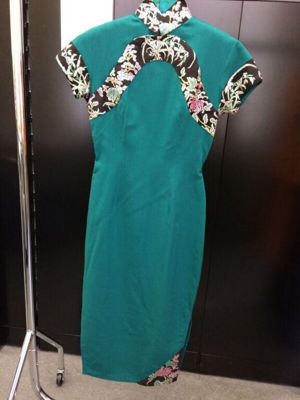
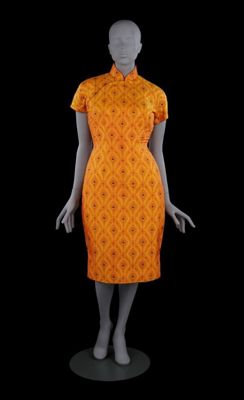
These two qipaos capture the precise moment when Shanghai tailoring met 1950s Western glamour in Hong Kong's fashion houses. The teal dress deploys embroidered florals as strategic punctuation—collar, cuffs, hem—while keeping the body clean, but the orange number commits fully to pattern, letting geometric motifs create the dress's entire visual rhythm.