V&A
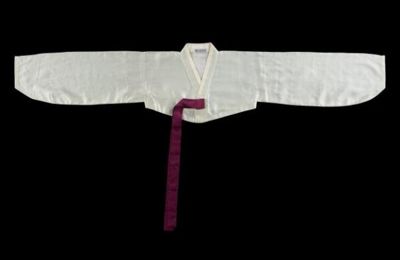
White Silk Korean Jeogori with Burgundy Ties
Korean Traditional · 1980s · Korean
Production
handmade
Material
silk
Culture
Korean
Influences
traditional Korean hanbok construction · Joseon dynasty court dress
A traditional Korean jeogori jacket constructed from white silk with a burgundy silk tie belt (goreum). The garment features the characteristic short, cropped silhouette that sits at the natural waist, with dramatically wide sleeves that taper toward narrow cuffs. The front panels overlap in the traditional Korean manner, secured by the long burgundy ribbon ties. The construction shows clean, minimal seaming typical of Korean hanbok tailoring, with the sleeves set into a straight shoulder line. The white silk appears to have a subtle sheen, suggesting a refined weave appropriate for formal occasions. This represents the hanbok's enduring influence on contemporary Korean fashion during the 1980s cultural revival period.
Pull the Thread→
Follow this garment wherever the graph leads
jacketloose fitv-neckhip length
Connected To
V&AKorean Traditional · 1980s
V&ARoaring Twenties / Art Deco · 1920s
Influences·traditional Korean hanbok construction
SHARED