V&A
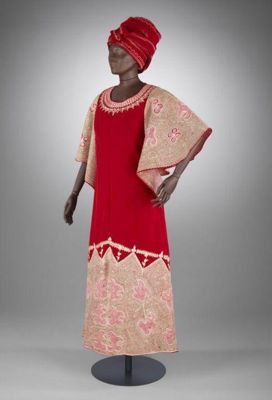
Red Synthetic Velvet Ceremonial Dress with Matching Hat
1970s · 1970s · Nigerian
Designer
Shade Thomas-Fahm
Production
artisan-craft
Material
synthetic velvet
Culture
Nigerian
Movement
African Fashion Renaissance · Hippie / Counterculture
Influences
traditional Yoruba gele head wrapping · West African ceremonial dress
A striking red synthetic velvet dress featuring a fitted sleeveless bodice with decorative white trim at the neckline and hem. The garment transitions to a cream-colored lower section adorned with gold floral embroidery or brocade patterns. The silhouette includes a straight-cut skirt that falls to ankle length. Accompanying the dress is a coordinating red velvet head wrap styled in a tall, sculptural turban formation. The white trim creates geometric zigzag patterns that bridge the red and cream sections, while the cream fabric displays intricate golden botanical motifs throughout. This ensemble represents the fusion of traditional West African ceremonial dress codes with 1970s international fashion sensibilities.
Pull the Thread→
Follow this garment wherever the graph leads
dressloose fitround neckfloor length
Connected To
V&A1990s · 1990s
V&A1970s · 1970s
61%
Movement·African Fashion Renaissance
SHARED20 years · cross-culture · cross-category