V&A
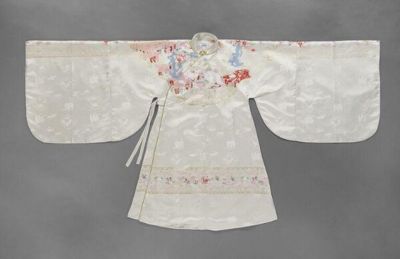
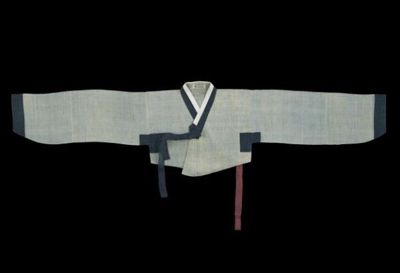
Cream Silk Korean Jeogori with Navy Coral Accents
Korean Traditional · 1980s · Korean
Production
handmade
Material
silk
Culture
Korean
Influences
traditional Korean hanbok construction · Joseon dynasty court dress
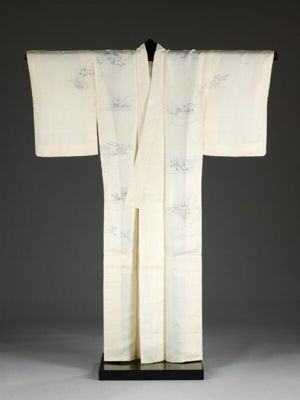
This Korean jeogori features the characteristic short jacket silhouette with wide, flowing sleeves that taper at the wrists. The cream-colored silk body contrasts with navy blue trim along the collar, cuffs, and front edges. The V-shaped neckline creates the traditional overlapping front closure typical of Korean hanbok construction. Pink ribbon ties (goreum) extend from the right front panel for securing the garment. The sleeves demonstrate the curved, generous cut that allows for graceful arm movement while maintaining the structured shoulder line. The jacket's proportions and construction methods reflect centuries-old Korean tailoring traditions adapted for 1980s formal wear.
Pull the Thread→
Follow this garment wherever the graph leads
jacketloose fitv-neckabove-the-hip
Connected To
V&ARoaring Twenties / Art Deco · 1920s
V&AKorean Traditional · 1980s
Influences·traditional Korean hanbok construction
SHARED